

Short answer: If pests keep showing up in January, it’s rarely random. In most homes, winter pest problems come down to three things: how pests are getting inside, what’s attracting them, and what’s allowing them to stay once they’re in.
January is when a lot of homeowners realize something got missed earlier in the season. You’re home more, pests are looking for warmth, and activity suddenly appears where it didn’t before. This guide walks through what to check, why it matters, and how to stop winter pest problems from repeating.
The Winter Pest Checklist That Makes a Real Difference
If you only tackle a few things this week, start here. These steps address the most common reasons pests move indoors during winter.
- Check door bottoms, thresholds, and the garage perimeter for light gaps or drafts.
- Seal utility penetrations under sinks, behind appliances, and around the water heater.
- Fix moisture issues such as slow drips, damp cabinets, or wet crawl spaces.
- Move pantry items and pet food into sealed containers and clean crumbs daily.
- Reduce garage clutter and remove cardboard stored directly on floors.
- Write down where and when you see activity. Repeating patterns matter.
TL;DR
- Winter pests move indoors because homes offer warmth, shelter, and food.
- Small gaps matter — rodents can fit through openings most people overlook.
- Sealing access points makes any treatment more effective.
- Air sealing often lowers energy costs so that preventive work can pay off twice.

Why Winter Pests Keep Coming Back
Most repeat winter infestations occur because the symptom is treated while the cause remains. A trap catches a mouse, but the entry point stays open. A spray reduces insects, but moisture remains. Food gets cleaned up inside, but pet food stays exposed in the garage.
As long as pests can get in and find what they need, they’ll keep testing the same areas. That’s why winter pest problems often feel like they never entirely go away.
What a Proper Winter Pest Inspection Looks For
A meaningful inspection doesn’t start with products. It starts with evidence. The goal is to identify which pest is present, how it’s entering, and the conditions that support its activity.
| Inspection focus | What gets checked | Why it matters |
| Signs of activity | Droppings, gnaw marks, grease marks, shed skins, live sightings | Confirms which pest is active and where it’s moving |
| Entry points | Door sweeps, garage corners, vents, utility lines, attic, and crawlspace access | Open access is the top reason problems repeat |
| Moisture | Leaks, condensation, damp insulation, crawlspace moisture | Moisture supports insects and rodent harborage |
| Harborage | Clutter, cardboard, dense storage, ground cover | Provides shelter and hides activity |
| Food sources | Pantry storage, pet food, trash handling, and grease buildup | Food allows pests to survive indoors long-term |
Any treatment used should always follow pesticide label directions. The U.S. Environmental Protection Agency explains that pesticide labels are legally enforceable and that using a product in a way not listed on the label is a violation of federal law.
Using Evidence Instead of Guesswork
Winter pest problems become much easier to solve when you rely on what you can actually see. Droppings, moisture, grease marks, and damage tell a story. When those clues align, the following steps are usually clear.
- Confirm the pest.
- Identify how it’s getting inside.
- Remove the conditions that support activity.
- Treat only what remains.

Why correct identification matters
A rodent problem isn’t handled the same way as a roach problem. Even among roaches, a German cockroach infestation is very different from an outdoor roach population that occasionally wanders inside. Treating the wrong pest almost always results in wasted time and repeated effort.
How seasonal behavior affects winter activity
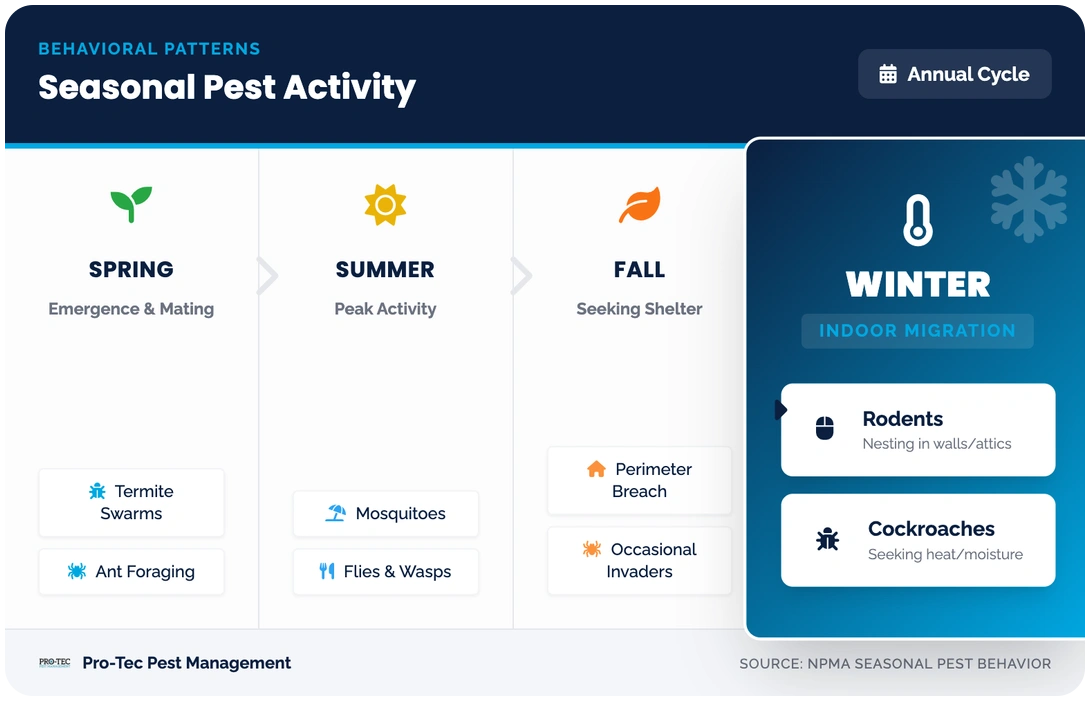
Cold weather pushes pests toward stable indoor environments. According to the National Pest Management Association, winter pests commonly include rodents and cockroaches seeking warmth, shelter, and food inside homes.
Why small entry points cause big problems
Access points are what allow problems to repeat. The Centers for Disease Control and Prevention notes that mice can fit through openings about a quarter inch wide. That’s why door gaps, utility penetrations, and garage corners deserve close attention.

Why one fix often solves more than one pest issue
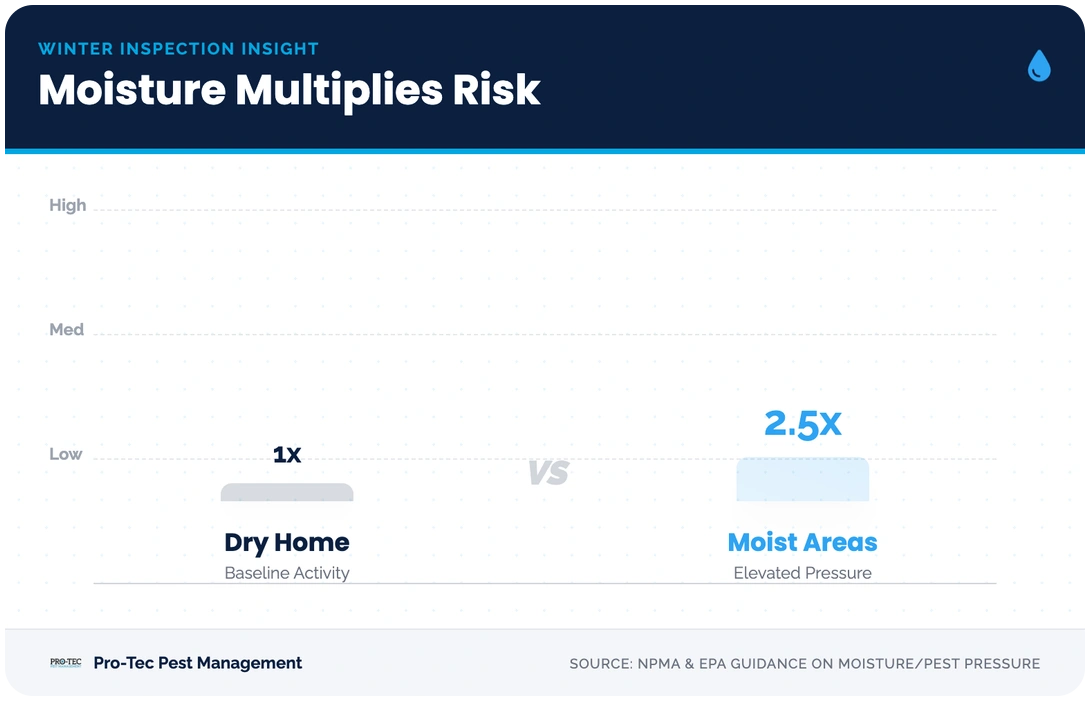
Many pests rely on the same conditions. A gap that lets mice inside can also allow roaches and other insects. Moisture problems often increase overall pest pressure, even if you only notice one type at first.
Quick Reference: What You See and What It Usually Means
| What you notice | What it usually indicates | What to do next |
| Droppings in cabinets | Active travel route near food or shelter | Clean safely, seal access points, and add monitoring |
| Roaches near sinks or appliances | Moisture combined with harborage | Fix moisture issues, reduce clutter |
| Noises in the walls or attic at night | Rodent access above the living space | Inspect vents, attic access, and roofline gaps |
| New pests after warm winter days | Seasonal invaders moving from voids | Seal exterior cracks and utility penetrations |
What Results to Expect When the Right Things Are Fixed
When access points and moisture issues are addressed, most homes see reduced indoor activity within one to two weeks. In some cases, activity briefly shifts as pests lose access before it declines.
Homes that combine sealing, sanitation, and targeted treatment see far fewer repeat winter issues than those that rely on products alone.
Local Conditions Matter
In Walker and across Livingston Parish, mild winters, humidity, and frequent rainfall keep moisture-driven pests active year-round. Slab edges, crawlspaces, and dense ground cover are common pressure points during winter.

When Professional Help Makes Sense
If pests keep returning despite sealing and cleanup, a professional inspection can help confirm the pest, uncover hidden access points, and prevent ongoing trial-and-error.
That’s where Pro Tec Pest Management fits in — not as a first step, but as a way to turn evidence into a clear, documented plan when DIY efforts stall.
Next step: If winter pests keep showing up, start with an inspection to confirm the pest, identify the drivers, and address the root causes first.